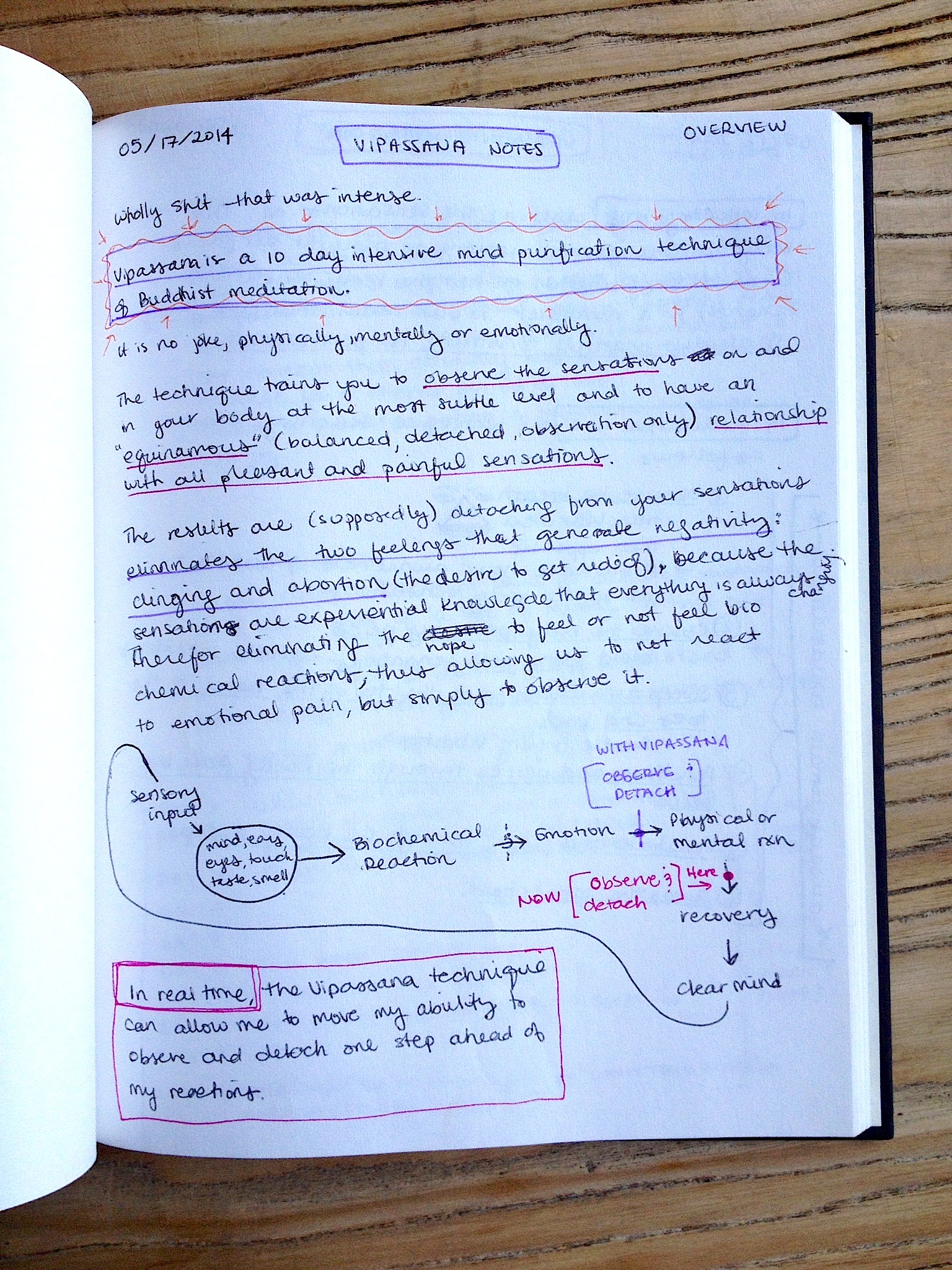
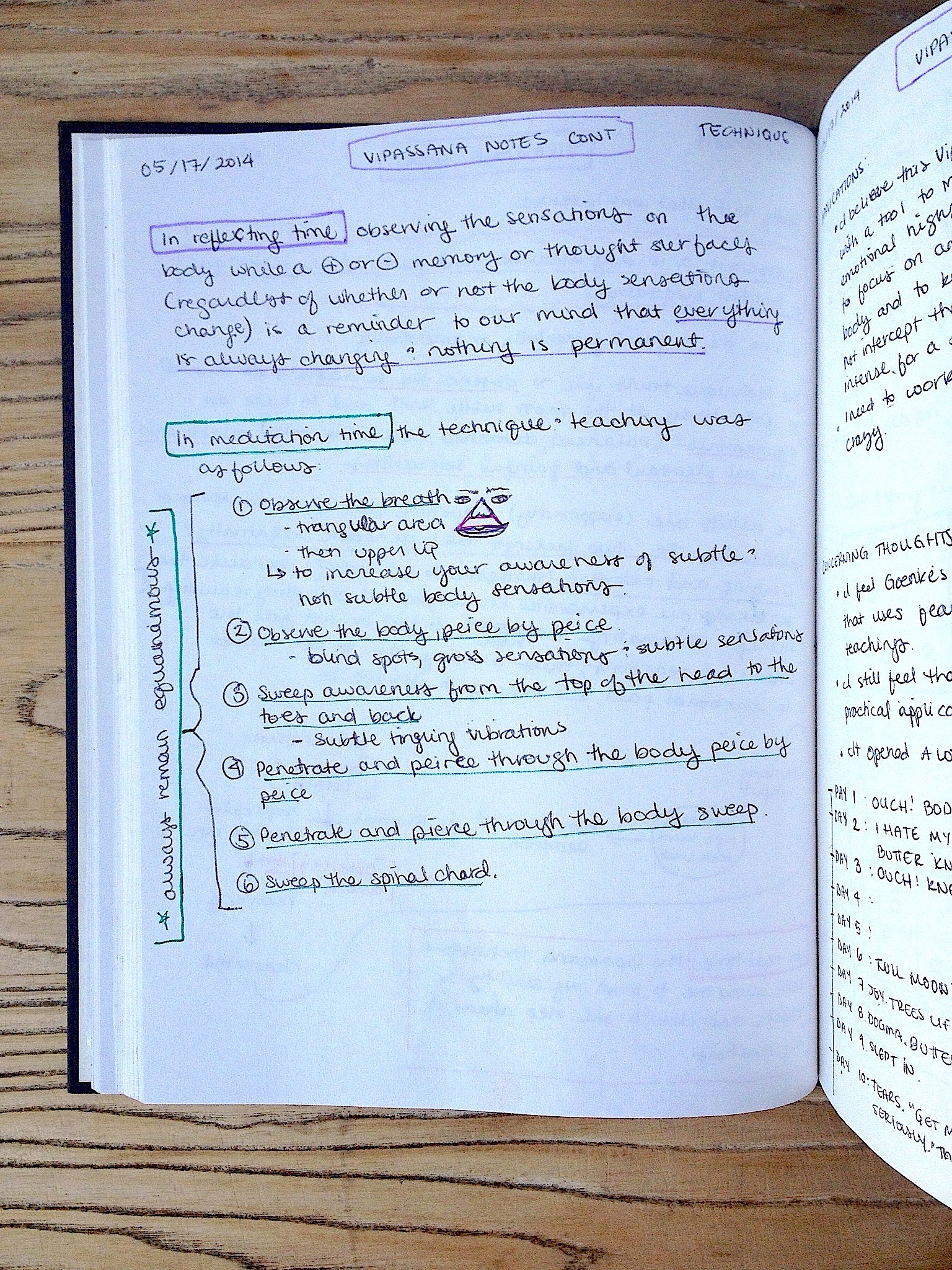
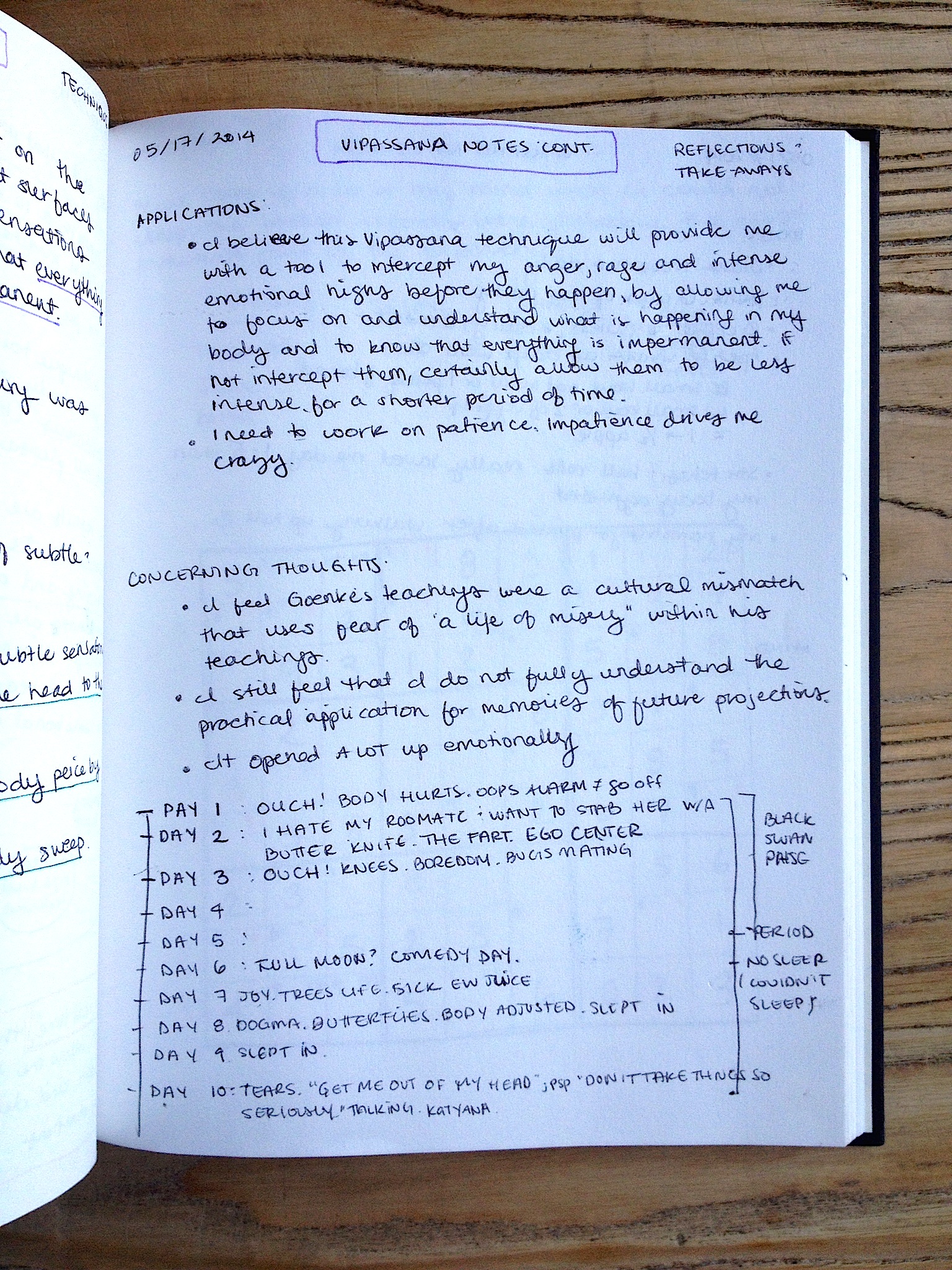
On May 7th, I embarked no a 10-day Vipassana.
This includes all day meditation sittings with no talking, no reading, no writing, no exercise, 4a wake up bells.
Below are my notes:
On May 7th, I embarked no a 10-day Vipassana.
This includes all day meditation sittings with no talking, no reading, no writing, no exercise, 4a wake up bells.
Below are my notes:
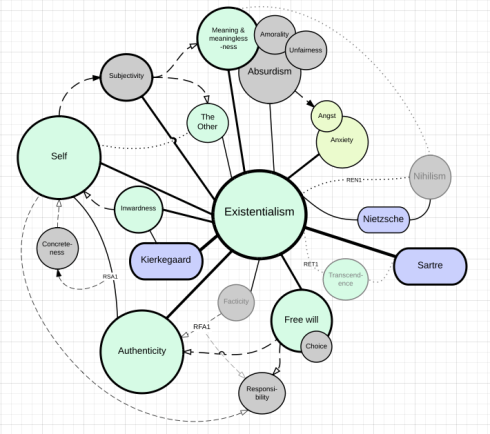
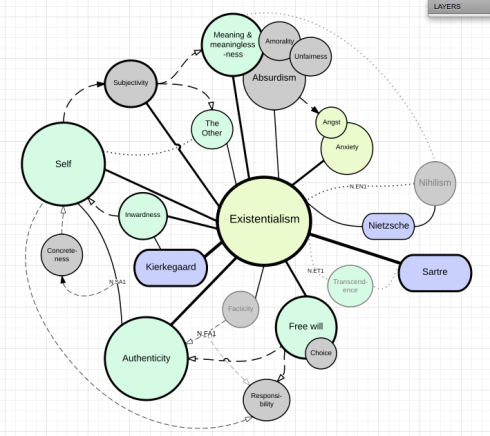
Click the graph to view layers and details in a separate window
WHAT IS EXISTENTIALISM
The way of thought by means of which
man seeks to become himself,
while approaching life from the perspective that
everything in existence is first and foremost
contextualized from the individual subject.
In true existential fashion, the previous definition is essentially my subjective choice and interpretation. According to my research and wikipedia, “there has never been general agreement on the definition of existentialism.”[1] The first two lines are actually referring to a closely-related/debatably-synonymous concept from Karl Jaspers of “Existenzphilosophie“.[1]
Existentialism lacks not only a concrete definition, but also concrete categorical placement; it is viewed as a cultural movement and a philosophical position[1][2].
I’ve interpreted existentialism in my “30ish days of Existential Research” as the study of myself to the deepest possible depth to unveal (or at least provide some strong hints) as to what constitutes my most core being and authentic self.
WHAT IS EXISTENTIALISM ALL ABOUT?
The analysis of human existence
The centrality of human choice
THE ANALYSIS OF HUMAN EXISTENCE
Existentialism centers around the belief that analysis of the human existence begins with the human subject – not merely the thinker, but the acting, living, feeling human. The analysis of one’s self is of the utmost importance because in doing so, one can understand the concrete, inward nature of his/her existence and live life passionately and sincerely (“authentically”).
“The subjective thinker has only one setting—existence—and has nothing to do with localities and such things. The setting is inwardness in existing as a human being; the concretion is the relation of the existence-categories to one another.”
– Soren Kierkegaard[1]
The authentic act is one that is in accordance with one’s freedom.[1]
THE CENTRALITY OF HUMAN CHOICE
Each individual—not society or religion—is solely responsible for giving meaning to life and living it passionately and sincerely (“authentically”).[1]
HISTORY & FIGURES OF EXISTENTIALISM
Footnotes
 Ph"ME"